Emira Fresh Food
Orange (Citrus sinensis) grown and packed in Türkiye — navel group from october, valencia carrying the programme through to june.

Orange

Citrus sinensis

Navel group from October, Valencia carrying the programme through to June.

HS code
0805.10
Varieties
4
Availability
Orange. Available October to June. Peak November to January and March to May.

Citrus

Overview

Our orange programme runs on two legs. The Navel group — Navelina, Washington Navel, Lane Late — covers October to April and is sold as an eating orange: seedless, easy to segment, high colour. Valencia takes over in March and runs to June as the juice and late-market variety.

Navels carry limonin and will develop bitterness in juice within a few hours of extraction, so they are not a juicing fruit regardless of what the price says. If the enquiry is for juice, the answer is Valencia. If it is for retail fruit bowl or food service segments, it is Navelina early and Lane Late from February.

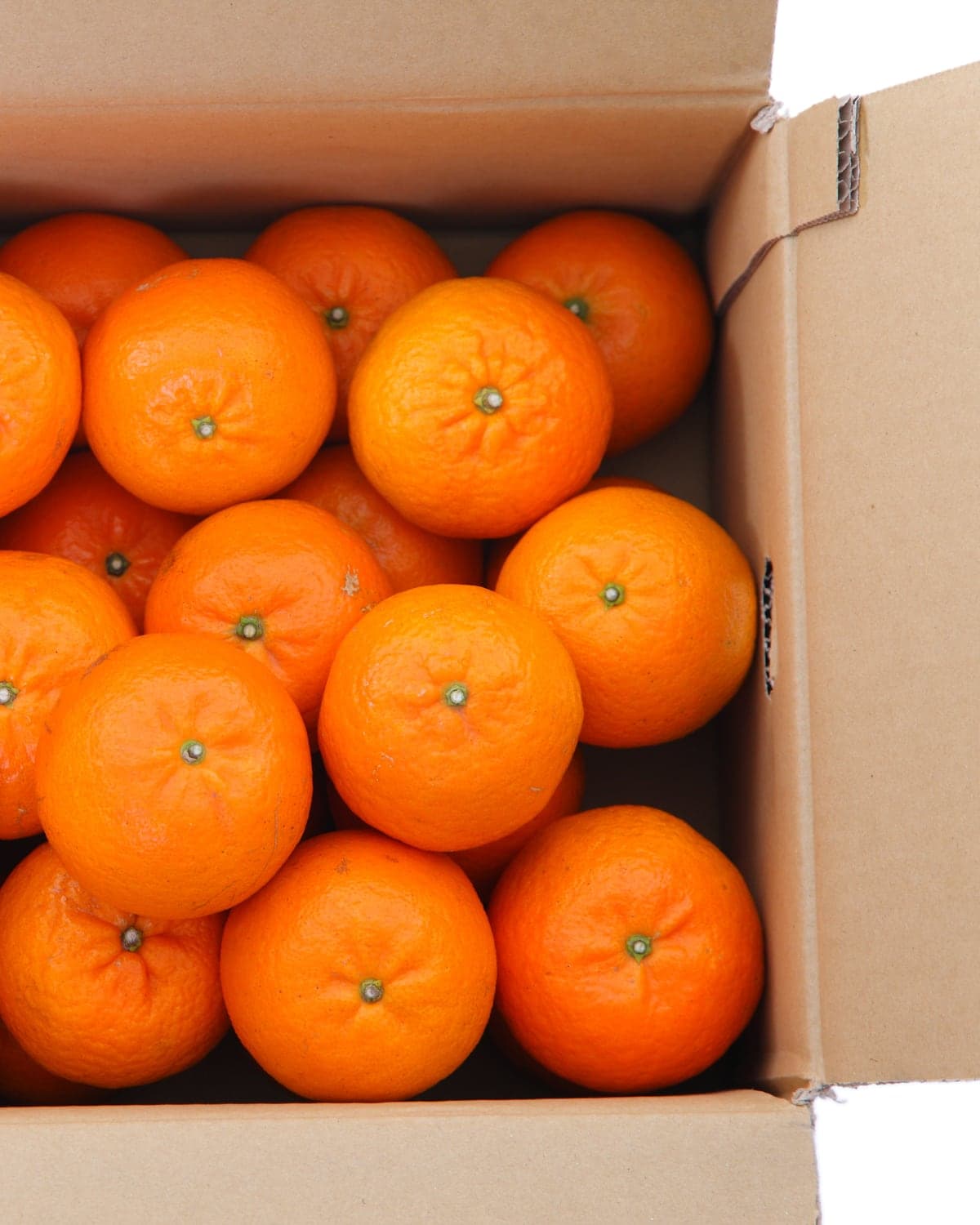
Turkish Navels size well — a normal year gives a size peak at count 8 to 10 on a 15 kg carton — and colour without degreening from mid-November. Earlier pick will need ethylene treatment, which we will do on request and declare on the lot.

Nutrition claims

  • Vitamin C contributes to the normal function of the immune system
  • Vitamin C increases iron absorption
  • Folate contributes to normal blood formation
  • Source of dietary fibre

Wording follows EU Regulation 1924/2006. Confirm permitted claims for your destination market.

4 varieties

Varieties

Open a variety for full detail

Navelina orange — oval to round, medium, deep orange, thin rind

Navelina

The earliest Navel and the opener of the orange season. Slightly oval, seedless, with thin deep-orange rind and a small navel. Peels and segments easily, brix 11–13°. It sizes a little smaller than Washington Navel and does not hold as long in store.

  • Seedless
  • Easy peel
  • Brix 11–13°
Shape
Oval to round, medium
Skin
Deep orange, thin rind
Navelina. Available October to December. Peak November.
Washington Navel orange — round, large, pronounced navel, bright orange, medium-thick rind

Washington Navel

The main-crop Navel and the volume variety from late November. Large, round, seedless, with a thick rind that peels cleanly and gives it good transit tolerance. Brix 12–14°. This is the size variety — a good year peaks at count 6 to 8 on a 15 kg carton.

  • Seedless
  • Easy peel
  • Brix 12–14°
Shape
Round, large, pronounced navel
Skin
Bright orange, medium-thick rind
Washington Navel. Available November to February. Peak December to January.
Lane Late orange — round, medium-large, small navel, deep orange, fine-textured

Lane Late

A late Navel mutation that hangs on the tree well past the Washington window without granulating. Seedless, round, with a smaller navel and slightly finer rind than Washington. Brix 12–14° and it holds acid better, so it eats fresher in March than a stored Washington does.

  • Seedless
  • Easy peel
  • Brix 12–14°
Shape
Round, medium-large, small navel
Skin
Deep orange, fine-textured
Lane Late. Available February to April. Peak March.
Valencia orange — round to oval, medium, orange, thin and smooth

Valencia

The late and the juice variety, running March to June. Round to slightly oval, thin smooth rind, few or no seeds, with high juice content and 11–13° brix. Unlike the Navels it carries no limonin, so extracted juice holds without turning bitter. Peels firmer than a Navel — it is not primarily an eating orange.

  • Seedless
  • Firm peel
  • Brix 11–13°
Shape
Round to oval, medium
Skin
Orange, thin and smooth
Valencia. Available March to June. Peak April to May.

Calendar

All varieties, month by month

  • Peak season
  • Available
  • Not available
  • Current month
Availability by product and month
ProductJANFEBMARAPRMAYJUNJULAUGSEPOCTNOVDEC
NavelinaCitrus
Washington NavelCitrus
Lane LateCitrus
ValenciaCitrus

Origin

Where this crop is grown, and why it matters.

Sizes

Sizes

Grading follows UNECE standards. Other calibers on request.

Size grades and calibers for Orange
SizesØ mmCount
092–11036–40
284–9648–52
477–8856–60
670–8072–80
864–7388–96
1060–68105–113
1256–63125–132

Storage

Storage

Recommended regime from our cold rooms to your door.

Storage
+3 to +6 °C
RH
90–95 % RH
Shelf life
35–56 days
Ethylene
No

Transport regime

Reefer set +4 °C, 20 % fresh-air exchange

Typical values per 100 g

Energy
47 kcal / 100 g
Vitamin C
53 mg / 100 g (66 % NRV)
Potassium
181 mg / 100 g
Folate
30 µg / 100 g
Dietary fibre
2.4 g / 100 g

Indicative reference values. Not a substitute for a certificate of analysis.

Packaging

Packaging

Every option below ships on standard pallets. Net weight per container is computed from the pallet configuration.

Packaging options for Orange
TypeNet kgDimensions mmPer palletPallets / 40′Net / 40′ kg
Telescopic carton15500 × 300 × 160642120,160
Open-top carton10400 × 300 × 130962120,160
Wooden crate20600 × 400 × 180482019,200
Mesh bag in carton42 kg × 2 nets1202110,080
Bulk bin3001200 × 1000 × 7601206,000

Container calculator

Select a packing option to see pallet configuration and net load for orange.

Net weight per box
15 kg
Box dimensions
500 × 300 × 160 mm
Boxes per pallet
64
Pallets per 40′ HC
21
21
Total pallets
1,344
Total boxes
20,160 kg
Total net weight

Figures are for a standard 40′ high-cube reefer, single-stacked. Actual load varies with pallet type, chilling regime and destination weight limits — confirm on the quotation.

Ready to talk volumes?

Send us the products, months and destination — we come back with a quotation, not a brochure.

Request a quote