Emira Fresh Food
Pepper (Capsicum annuum) grown and packed in Türkiye — blocky, kapya, charleston and turkish long green — protected crop october to june.

Pepper

Capsicum annuum

Blocky, Kapya, Charleston and Turkish long green — protected crop October to June.

HS code
0709.60
Varieties
5
Availability
Pepper. Available January to December. Peak August to March.

Vegetables

Overview

Pepper runs alongside tomato in the Antalya and Mersin protected districts and covers four distinct market segments that share almost nothing except a botanical name.

Blocky peppers — the three- and four-lobed California Wonder type in red, yellow and orange — are the European retail item and the highest value. Kapya is the long conical red pepper grown for roasting and for processing into paste. Charleston is the pale green-yellow long sweet pepper of the eastern Mediterranean trade. Sivri is the Turkish long green, thin-walled, mildly hot, and it moves in volume to the Gulf and the Balkans.

Coloured blocky fruit is picked at full colour and never ripens further off the plant, so a green-shouldered red pepper stays that way. Specify the colour break percentage you will accept.

Nutrition claims

  • Vitamin C contributes to the normal function of the immune system
  • Vitamin C increases iron absorption
  • Vitamin A contributes to the maintenance of normal vision
  • Naturally low in fat and sodium

Wording follows EU Regulation 1924/2006. Confirm permitted claims for your destination market.

5 varieties

Varieties

Open a variety for full detail

Blocky red (California Wonder) pepper — blocky, 3–4 lobes, 180–250 g, deep glossy red

Blocky red (California Wonder)

Three- to four-lobed square-shouldered fruit at 180 to 250 g with thick sweet walls and deep red colour at full maturity. Brix 6–8°. The highest-value pepper in the range and the European retail standard. Picked at full colour — it will not develop further off the plant.

  • Brix 6–8°
Shape
Blocky, 3–4 lobes, 180–250 g
Skin
Deep glossy red
Notes
Picked at full colour; no post-harvest colouring
Blocky red (California Wonder). Available October to June. Peak November to March.
Blocky yellow pepper — blocky, 3–4 lobes, 170–240 g, bright golden yellow

Blocky yellow

The same blocky type in bright golden yellow, 170 to 240 g, with thick walls and 6–8° brix. Slightly milder and marginally softer than the red. Sold predominantly into mixed traffic-light retail packs.

  • Brix 6–8°
Shape
Blocky, 3–4 lobes, 170–240 g
Skin
Bright golden yellow
Notes
Mixed retail packs
Blocky yellow. Available October to June. Peak November to March.
Kapya pepper — long conical, 15–22 cm, deep red, glossy
Peak season

Kapya

Long conical deep-red pepper, 15 to 22 cm, with thick sweet flesh and a low seed count. Brix 7–9° — the sweetest pepper we grow. Grown for roasting, for peeling and for paste production. Turkey is the origin of the type.

  • Brix 7–9°
Shape
Long conical, 15–22 cm
Skin
Deep red, glossy
Notes
Roasting and paste type; thick flesh
Kapya. Available July to November. Peak August to October.
Charleston pepper — long tapered, 18–25 cm, pale green-yellow, reddening at maturity

Charleston

Long tapered sweet pepper, 18 to 25 cm, pale green to yellow-green turning red at full maturity. Thin-walled, sweet and mild at 5–7° brix. The eastern Mediterranean and Balkan long-pepper standard.

  • Brix 5–7°
Shape
Long tapered, 18–25 cm
Skin
Pale green-yellow, reddening at maturity
Notes
Thin-walled sweet type
Charleston. Available October to June. Peak November to February.
Sivri (Turkish long green) pepper — slim curved, 12–18 cm, mid green

Sivri (Turkish long green)

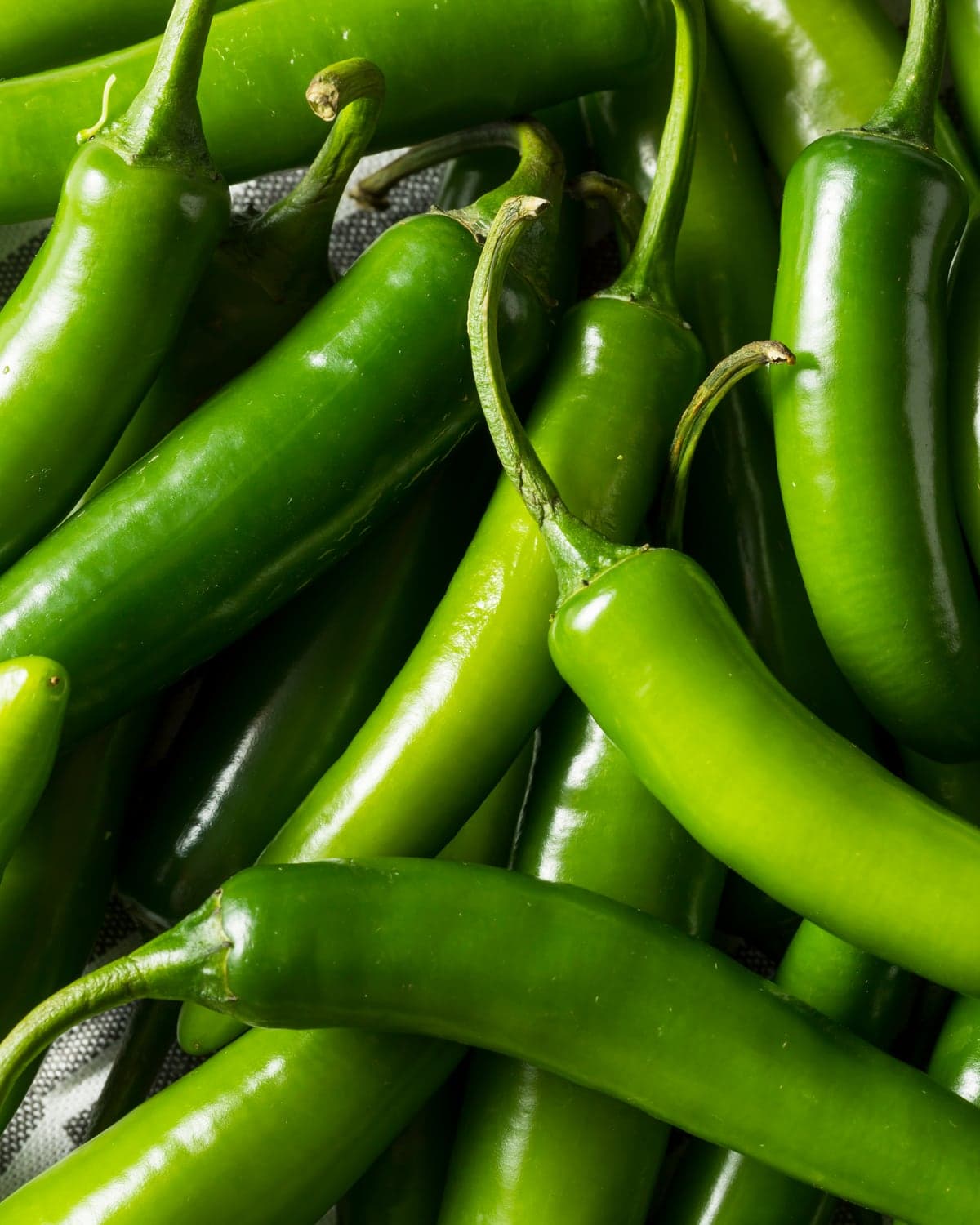
Slim, curved, thin-walled green pepper at 12 to 18 cm, mildly hot at 500 to 2,000 Scoville. Brix 4–6°. The volume item into the Gulf and the Balkans, sold loose in cartons or crates.

  • Brix 4–6°
Shape
Slim curved, 12–18 cm
Skin
Mid green
Notes
Mildly hot, 500–2,000 SHU
Sivri (Turkish long green). Available October to June. Peak November to March.

Calendar

All varieties, month by month

  • Peak season
  • Available
  • Not available
  • Current month
Availability by product and month
ProductJANFEBMARAPRMAYJUNJULAUGSEPOCTNOVDEC
Blocky red (California Wonder)Vegetables
Blocky yellowVegetables
KapyaVegetables
CharlestonVegetables
Sivri (Turkish long green)Vegetables

Origin

Where this crop is grown, and why it matters.

Sizes

Sizes

Grading follows UNECE standards. Other calibers on request.

Size grades and calibers for Pepper
SizesØ mmCount
GG≥ 90blocky, extra large
G80–90blocky, large
M70–80blocky, medium
L1length 18–25 cmCharleston / Kapya
L2length 12–18 cmSivri

Storage

Storage

Recommended regime from our cold rooms to your door.

Storage
+7 to +10 °C
RH
90–95 % RH
Shelf life
14–21 days
Ethylene
Yes — do not mix-load

Transport regime

Reefer set +8 °C. Below +7 °C causes surface pitting and calyx decay. Coloured fruit is more chilling-tolerant than green.

Typical values per 100 g

Energy
31 kcal / 100 g
Vitamin C
128 mg / 100 g (160 % NRV)
Vitamin A
157 µg RE / 100 g
Potassium
211 mg / 100 g
Dietary fibre
2.1 g / 100 g

Indicative reference values. Not a substitute for a certificate of analysis.

Packaging

Packaging

Every option below ships on standard pallets. Net weight per container is computed from the pallet configuration.

Packaging options for Pepper
TypeNet kgDimensions mmPer palletPallets / 40′Net / 40′ kg
Open-top carton5500 × 300 × 1301602116,800
Plastic returnable crate5600 × 400 × 1451202012,000
Carton, traffic-light 3 × 4 pack4600 × 400 × 1201322010,560
Open-top carton8600 × 400 × 160882014,080

Container calculator

Select a packing option to see pallet configuration and net load for pepper.

Net weight per box
5 kg
Box dimensions
500 × 300 × 130 mm
Boxes per pallet
160
Pallets per 40′ HC
21
21
Total pallets
3,360
Total boxes
16,800 kg
Total net weight

Figures are for a standard 40′ high-cube reefer, single-stacked. Actual load varies with pallet type, chilling regime and destination weight limits — confirm on the quotation.

Ready to talk volumes?

Send us the products, months and destination — we come back with a quotation, not a brochure.

Request a quote